Neo-Traditional Tattoos: The Complete Guide
Traditional tattooing grown up: the same bold bones, but with a wider palette, softer shading, decorative detail and subjects that range from foxes and owls to full illustrated scenes.
Neo-traditional is what happened when artists raised on American traditional got better machines, better inks and art-school training — and decided to keep the discipline while breaking the palette rules. The skeleton is the same: strong outlines, readable silhouettes, designs built to last. On top of that skeleton, neo-traditional layers richer color, smoother gradients, decorative flourishes like filigree and dotwork halos, and a much wider cast of subjects.
Where old school sticks to flat red-green-gold, neo-traditional roams: deep jewel tones, muted earth colors, pastels, skin-tone shading and fine secondary linework inside the main shapes. The result reads like a vintage illustration — a storybook or art-nouveau poster that happens to live on skin.
Neo-Traditional at a glance
| Line weight | Bold outer contour with finer interior lines for detail |
|---|---|
| Palette | Wide: jewel tones, earth colors, pastels and skin-tone shading |
| How it ages | Bold contour holds for decades; pastels and fine lines soften first |
| Best placements | Forearm, upper arm, thigh, calf, shoulder and ribs |
| Minimum size | 4 inches minimum; 5 to 8 inches is the happy range |
How Neo-Traditional designs are drawn
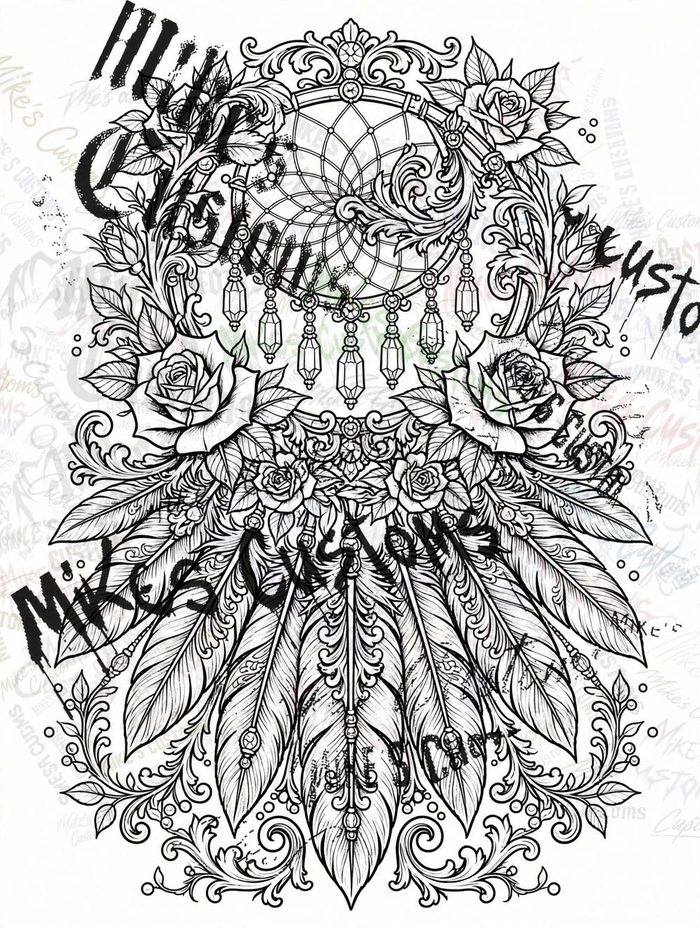
Neo-traditional designs combine two line weights: a bold outer contour that guarantees readability, and finer interior lines for fur, feathers, hair and ornament. Color shading is blended rather than flat, with darker tones pushed to the edges to keep the shape modeled. Subjects lean natural and decorative — animals, birds, flowers, insects, lady heads, daggers wrapped in botanicals — often framed by dots, rays, beads or ornamental borders that finish the piece like a picture frame.
Best placements for Neo-Traditional tattoos
The style loves a mid-sized canvas with some flow: forearms, upper arms, thighs, calves, shoulders and the side of the ribs. Its decorative framing makes it excellent for shaped placements — a piece built to wrap a shoulder cap or climb a forearm. Neo-traditional also bridges gaps well in patchwork collections, since its ornaments can be drawn to echo neighboring pieces.
Where a neo-traditional piece lands decides how its ornament is built. A forearm wrap can use filigree and dot halos to carry the eye around the limb, but the artist has to place the main face or animal on the flattest outer panel so it does not warp when the wrist rotates. Thighs offer the largest calm panel on most bodies and suit the tall, framed compositions this style loves, though the inner thigh is markedly more sensitive and swells faster, which can shorten a session. Upper-back and shoulder-blade placements let a piece spread symmetrically, yet shoulder movement means the stencil must be checked with the arm raised and lowered before work starts. On the ribs the canvas is striking and the pain and breathing movement are real constraints; detailed neo-traditional rib work is better planned as outline first, color in a second sitting. Necks and hands expose the finer interior lines to constant motion and sun, and those are the lines this style can least afford to lose early.
How big does a Neo-Traditional tattoo need to be?
Neo-traditional needs more room than old school because it carries more information: the decorative detail and blended shading want four inches at an absolute minimum, and most pieces are happiest at five to eight inches. Shrink a detailed neo-traditional design too far and the fine interior lines are the first casualty as the tattoo settles. If you love a design but your spot is small, ask for a simplified custom version rather than a tiny print of the full drawing.
How Neo-Traditional tattoos age
A well-drawn neo-traditional tattoo ages nearly as gracefully as traditional, provided the bold outer structure was respected — that contour is doing the long-term work. The finer interior lines and lightest pastel tones soften first; jewel tones and earth colors hold up well. Artists who know the style leave "sacrifice zones" — areas of open skin inside the design — so future softening has somewhere to go. A touch-up at the ten-year mark usually restores the decorative detail.
Aftercare rewards patience because blended color is laid in layers. Areas where several passes built a gradient can feel tighter and flake in larger pieces than a flat traditional fill; do not pull at that flaking, let it release in washing, or you can lift the lighter tone underneath and heal a cloudy patch. Jewel tones such as teal, burgundy and mustard hold their character well, while peach, lilac and pale pink are the first to quiet down, so a design that depends entirely on its palest tones for contrast is drawn on borrowed time. In the chair, expect a mid-sized piece to run three to five hours or split across two sessions, with the bold outline and darkest values placed first so the composition survives even if you tap out before color. The style suits people who want illustration and ornament but still want a tattoo that reads at distance. It suits people badly who want tiny work, very low cost per piece, or an image copied exactly from a photograph without stylizing it for skin.
Choosing a Neo-Traditional design
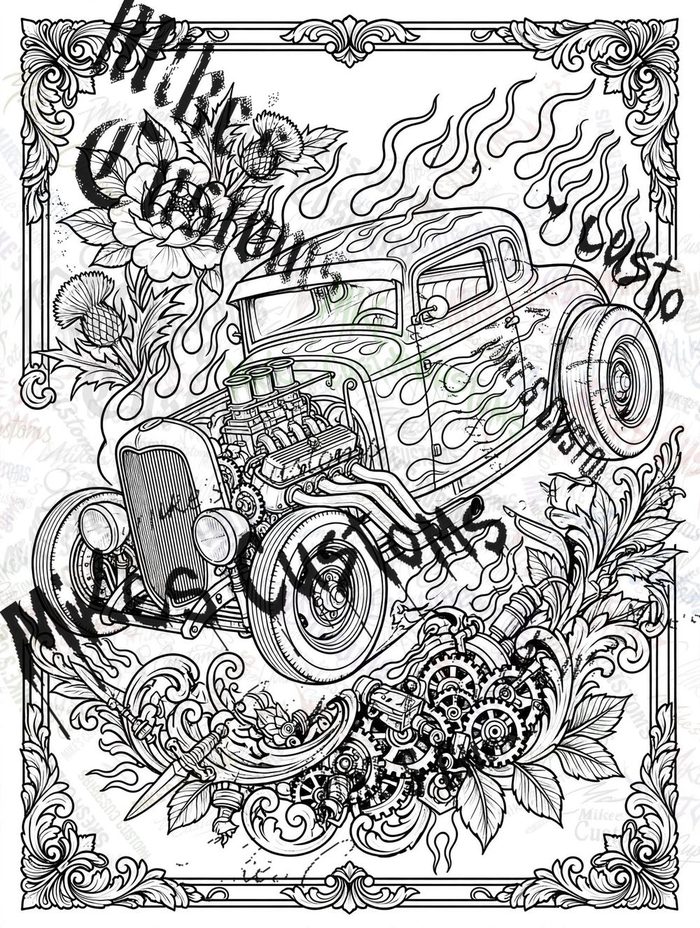
Browse this style when you want a piece with storybook richness that still behaves like a tattoo. Our neo-traditional designs ship with full color and linework, and because the style takes personalization so well — a pet's portrait in an ornamental frame, your flowers around a classic dagger — it is one of the most-ordered styles at the custom desk.
When choosing a neo-traditional design, look at how its decoration is attached to the subject. In strong work the filigree, dots and framing grow out of the animal, flower or figure itself, following its curves and finishing its silhouette. In weak work the ornament is sprinkled around a subject it has nothing to do with, and that disconnect only grows more obvious as the finer lines soften. Pick the piece whose frame and subject would look wrong separated, because on skin they never will be.
Browse Neo-Traditional designs Order a custom Neo-Traditional design
Related style guides
- Japanese (Irezumi) — Centuries-old Japanese tattooing: dragons, koi, tigers, peonies and waves composed as full-body storytelling, with wind bars, clouds and water binding every element together.
- Black & Grey Realism — Photographic shading built from black ink and water: portraits, statues, animals and scenes rendered in smooth grey gradients with no linework doing the heavy lifting.
- Color Realism — Full-color photographic tattooing: animals, eyes, flowers, food, film scenes and portraits rendered with blended color, soft edges and skin-tone highlights.
New to all of this? Start with how to choose a tattoo design that ages well, then the complete aftercare guide for what happens after the appointment.