Fine Line Tattoos: The Complete Guide
Delicate single-needle tattooing: hair-thin lines, tiny script, small botanicals and minimalist pieces with an airy, drawn-on-with-a-pen feel.
Fine line tattooing uses single needles or very small groupings to lay down lines a fraction of the width of traditional work. It grew out of the single-needle black and grey tradition and bloomed with the minimalist movement: small flowers, tiny symbols, delicate script, micro illustrations and soft, sketch-like pieces that sit lightly on the skin.
It is the style of understatement — a tattoo meant to be discovered at conversation distance rather than announced across the room. That subtlety is exactly its appeal, and it comes with honest trade-offs every buyer should understand before choosing it.
Fine Line at a glance
| Line weight | Hair-thin single-needle or very small grouping lines |
|---|---|
| Palette | Black or soft grey; minimal or no shading, mostly open skin |
| How it ages | Most delicate; hairlines soften and can fade unevenly in 5 to 10 years |
| Best placements | Inner forearm, wrist, ankle, collarbone, behind ear, ribs and spine |
| Minimum size | 1 to 4 inches, small but not microscopic; letters need real height |
How Fine Line designs are drawn
A fine line design is mostly air: thin black or grey lines, minimal or no shading, lots of open skin inside the piece. Where shading exists it is usually stippled dots or the faintest wash. Script in this style mimics handwriting or typewriter type at small sizes. The drawing must be economical — every line earns its place, because at this weight there is no fill to hide behind and no bold contour to carry a weak composition.
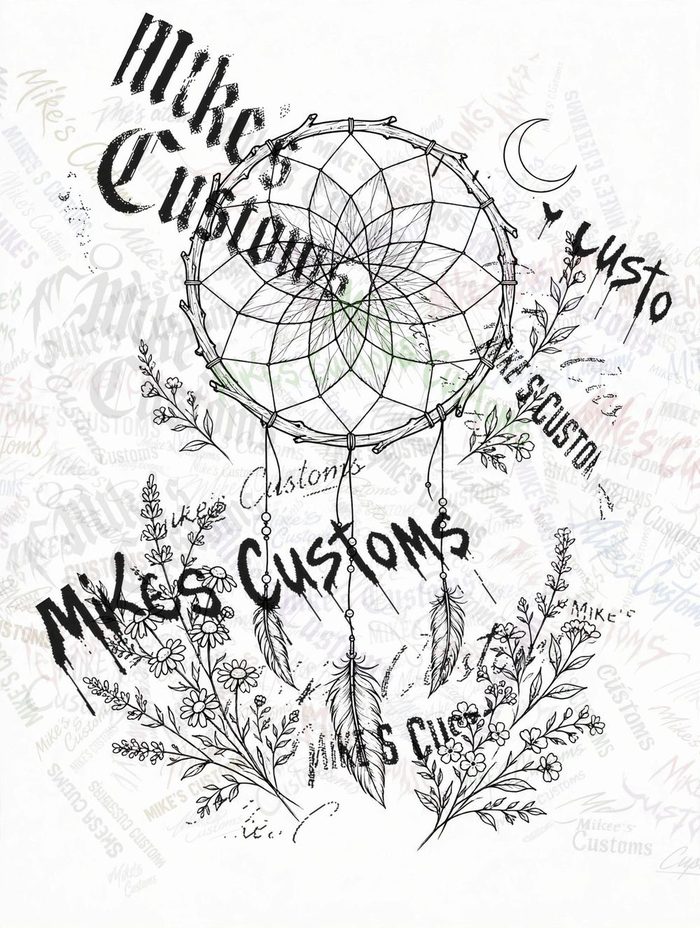
Best placements for Fine Line tattoos
Fine line favors protected, low-friction placements: inner forearm, wrist, ankle, collarbone, behind the ear, ribs, spine and the inner arm. It struggles where skin renews fast or rubs constantly — fingers, palms, feet and the sides of hands fade quickly and blur, and most honest artists will warn you or refuse those spots for fine work. Delicate skin that rarely sees sun keeps hairlines crisp longest.
Fine line placement is a friction map before it is anything else. The side of a finger, the palm edge and the sole-adjacent side of the foot lose lines in patches because that skin sheds and rubs constantly, and a design there should be sold as temporary-looking from the start. Behind the ear and on the ear itself the skin is thin and curved, so even a tiny piece needs its stencil checked from front and side angles, and hair products and glasses arms become aftercare factors while it heals. The sternum and under-breast area move with every breath, which makes long straight hairlines harder to pull cleanly and the session slower than the design's size suggests. Wrist pieces sit under watch straps, desk edges and sleeve cuffs; moving the watch to the other wrist for two weeks is a small, real part of healing one well. The collarbone photographs beautifully and catches sun and bra straps in equal measure, so expect to defend a fine collarbone piece from both friction and ultraviolet light for its whole life, not just while it heals.
How big does a Fine Line tattoo need to be?
Here is the fine line paradox: the style looks small, but too small is its enemy. Letters under about a quarter-inch tall close up as lines thicken with age; tiny details merge. Well-planned fine line pieces are small but not microscopic — most sit between one and four inches with breathing room between elements. If you want a lot of detail in a tiny footprint, the design has to be simplified for skin: fewer lines, more space. A good fine line artist will redraw, not just shrink.
How Fine Line tattoos age
Let us be straight, because this style collects the most disappointed expectations online: fine lines soften and spread more noticeably than bold work, and the lightest lines can fade unevenly over five to ten years. That does not make fine line a bad choice — it makes it a choice with a maintenance plan. Pieces are designed expecting a touch-up, and owners who accept that keep them delicate for decades. If the idea of any future touch-up bothers you, choose a style with heavier linework instead.
Technique is why results in this style vary so widely between artists. A hairline placed too shallow fades in months, and the same line placed too deep blows out into a fuzzy blue-grey stroke that cannot be taken back, so the margin between perfect and wrong is thinner than in any bold style. Ask to see healed work at least a year old, not fresh photographs, because fresh fine line always looks flawless. During healing, a fine piece produces almost no visible scab and can look finished at a week, but the lines are still settling under new skin and can appear to come and go slightly before stabilizing at about a month. Session time is deceptive too: a two-inch piece may take an hour because the artist is working slowly, checking depth constantly and often using a single needle for the entire design. This style suits people who value subtlety and accept upkeep as part of ownership. It does not suit anyone who wants a guarantee of permanence, dense micro-lettering, or a design squeezed onto a finger because it looked good in a filtered photograph online.
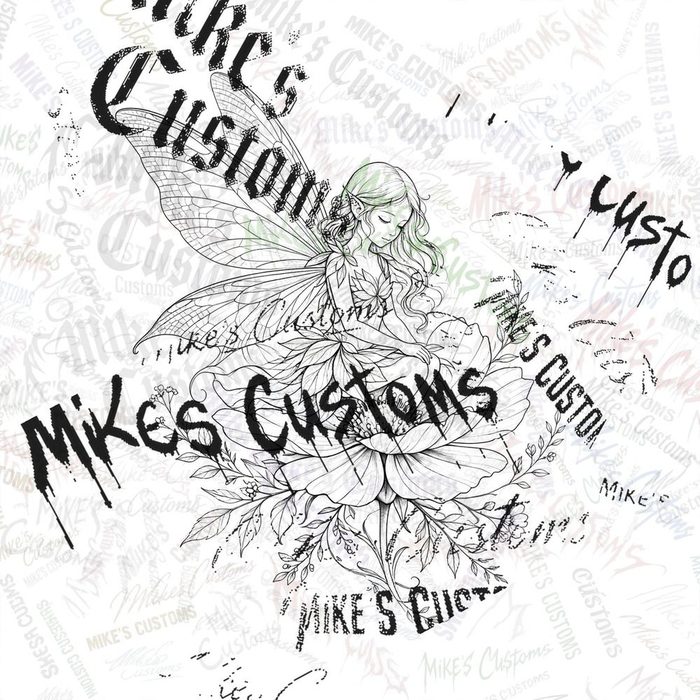
Choosing a Fine Line design
Our fine line designs are drawn at honest sizes — the product notes and your artist can tell you the smallest safe scale for each piece. When ordering fine line as a custom, say the exact placement early: a design for a wrist and a design for a ribcage are drawn differently. And spell any script letter by letter in the brief; at this size, a typo is forever and very legible.
Browse Fine Line designs Order a custom Fine Line design
Related style guides
- Watercolor — Painterly tattooing that mimics wet pigment: splashes, drips, bleeds and translucent color washes, usually anchored by a black linework subject at the center.
- Geometric & Sacred Geometry — Precision-built tattooing: mandalas, sacred geometry, symmetry, pattern and line systems drawn on grids so the math survives the move to curved skin.
- Dotwork — Images built entirely from dots: shading, gradients and whole pictures stippled point by point, from soft grey fog to dense black pattern.
New to all of this? Start with how to choose a tattoo design that ages well, then the complete aftercare guide for what happens after the appointment.