Chest Tattoos: Placement, Pain, and How a Big Canvas Ages
The chest is a big, mostly private canvas that rewards scale and punishes poor planning. Placement across sternum, pecs and collarbones, honest pain by zone, stretch and weight change, and how chest work ages.
The chest is one of the best large canvases on the body: broad, mostly flat, easy to cover at work, and painful in a pattern you can plan around — sharp over the sternum and collarbones, manageable across the pecs — with one condition that decides whether a big piece still looks right in ten years: chest skin stretches and shifts with muscle, weight, and age more than almost any other flat canvas, so the design has to be drawn for the body you will have, not only the one in the mirror today.
That trade — privacy and scale now, movement over time — is a good one for most people, which is why chest pieces anchor so many serious collections. This guide maps the chest zone by zone, gives the honest pain report, and covers sizing, symmetry, stretch, and aging before you commit half your torso to a single drawing.
The zones: one chest, four canvases
Artists do not price or plan "a chest tattoo." They plan a sternum piece, a single-pec piece, a full chest panel, or a collarbone line, because each behaves differently in the chair and over the years.
| Sub-placement | Pain, honestly | Visibility | How it ages and moves |
|---|---|---|---|
| Center chest over the sternum | High — six to eight; thin skin directly over bone, and every breath moves it | Private under a shirt; shows with an open collar or swimwear | Stable skin, little stretch; symmetrical centerpieces hold their alignment well |
| One pec or one side of the chest | Moderate — three to five over muscle, rising near the nipple and armpit | Private; easy to build into a half panel or sleeve later | Moves with muscle gain and loss more than the center does; bold shapes cope best |
| Full chest panel, collarbone to below the pecs | Mixed — moderate across the pecs, high at sternum, collarbones, and the armpit edges | Private under clothing, unmistakable without it | The full picture shifts as one piece with weight change; planned panels distort less than collected pieces |
| Collarbone and upper chest line | High at the bone itself — a rattling five to seven — easier just below it | Semi-public; shows with wide necks, tanks, and open shirts | Thin, sun-exposed skin; fine script here softens and fades earliest |
| Under-pec and sternum underside | High — tender, ticklish for many people, hard to stretch flat | Most private zone on the chest | Protected from sun and ages slowly; sweat and underband friction are the local wear |
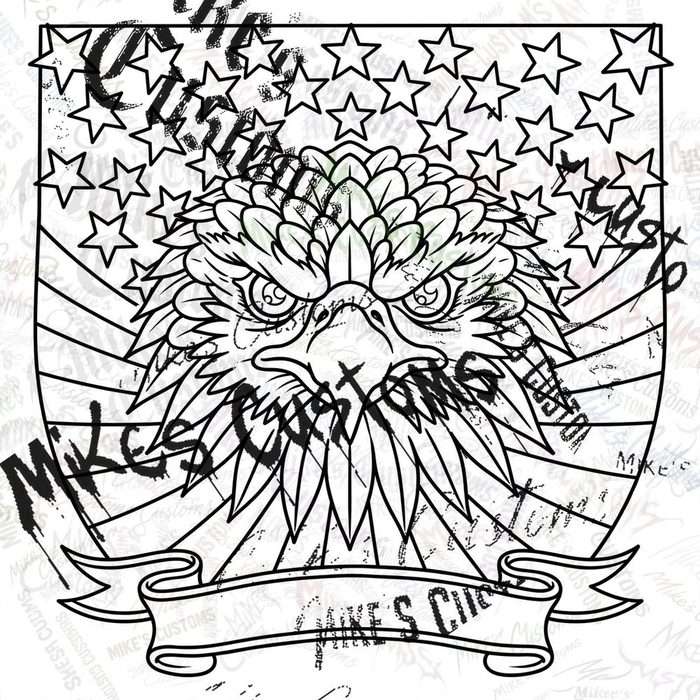
Read the table as a planning tool. A centered eagle, a pair of swallows, or a single emblem belongs on the sternum line where symmetry helps it. A sprawling single subject belongs on one pec with room left to grow. A full panel is a commitment of several sessions, and it should be drawn as one composition from the start — the chest version of the rule in our sleeve planning guide, where planned work and collected work age into visibly different results.

The pain report, without the bravado
Across the fleshy part of the pecs, most people rate chest work a three to five out of ten — a hot, scratchy discomfort that comes and goes with the artist's passes. Three addresses are honestly worse. The sternum is skin on bone with no padding, and the vibration travels; the collarbones rattle in a way people remember; and the edges near the nipple and armpit sharpen quickly, because the skin thins and the nerves gather there. Our placement and pain guide ranks the chest's zones against the rest of the body if you are choosing between canvases.
Breathing is the chest session's real discipline. The canvas rises and falls, and good artists work with your breath — short passes, pauses at the top of a breath, sternum lines timed instead of forced. Say when you need to cough, laugh, or shift; all three move the needle's target. Full panels are almost never one sitting: plan two to four sessions, outline first, which also spreads the cost honestly.
Healing is comparatively kind — the chest is easy to keep clean and protect with loose shirts — with two warnings from our aftercare guide: seatbelts cross healing chest work, so pad the strap for the first week, and sleeping on your stomach is off until the piece settles.
Symmetry, and the mirror check that decides it
More chest designs are symmetrical than anywhere else — spread wings, paired swallows, mirrored florals — and symmetry is unforgiving. A wing half an inch higher than its partner is visible in every mirror for life, and a stencil that looks level while you lie back can sit crooked when you stand, because the skin settles differently under gravity.
This is exactly the failure our stencil-day guide exists to prevent. For chest work the routine is non-negotiable: stencil placed, then you stand, arms at your sides, breathing normally, checked in a full mirror and in a straight-on photo. Move, shrug, and breathe deeply while you look.
A design that only aligns in one pose is not aligned. Good artists expect this and build in time for repositioning.
Lettering gets the same check plus one more: read it in the mirror as others will, letter by letter. A stencil error here has nowhere to hide.
Stretch, weight change, and muscle: designing for the future body
Here is the chest's honest condition. Pecs grow with training and shrink without it. Chests change with weight gained and lost, with pregnancy and nursing, and with aging skin. A design drawn tight and detailed at one body composition will spread, soften, or sag at another, and no artist can ink around biology.
Three drawing choices decide how gracefully a chest piece rides those changes, a subject our article on how tattoos age covers across the whole body. First, bold over fine: strong outlines and clear shapes distort kindly, while dense fine detail and photoreal shading show every shift — the reason classic chest eagles and traditional panels still read after thirty years and several body shapes. Second, flow over geometry: wings, waves, feathers, and florals that follow the chest's own lines move with it, while perfect circles, straight borders, and rigid frames announce distortion immediately — the same law that governs compass placement in our compass tattoo meaning article. Third, margin at the edges: a panel that stops short of the armpit crease and the collarbone's sharpest curve avoids the skin that stretches and folds most.
None of this argues against a chest piece. It argues for telling your artist the truth about your plans — training goals, expected weight change, future pieces — so the drawing is made for the range of bodies you will actually live in.
Sun, shirts, and the working life of a chest piece
Day to day, the chest is a protected placement, and that protection is its great advantage over the forearm canvas described in our forearm placement guide: a shirt covers it at work and at formal events. Most chest tattoos are fully private until swimwear or open shirts, which makes the chest the natural home for large personal work — memorial panels, family pieces, and designs whose meaning is for the wearer first.
The exposure it does get is concentrated: beach days, shirtless work outdoors, and the V of an open collar spend sun on the upper chest and collarbone line first. That strip is where chest color fades earliest. Black and grey shrugs this off better; saturated color in the Neo-Traditional style, with its bold contour doing the long-term work, is the sensible middle path for a panel you want bright at year ten.
For anyone who trains: healing chest work and bench press do not mix for the first couple of weeks — a bar path crosses the sternum. Plan sessions around training, and tell your artist if a competition or photo shoot sits near the healing window.
Choosing and sizing a chest design
Work in this order, and the chest will reward you:
- Pick the zone before the subject. Center, one side, or full panel decides the shape of everything that follows.
- Let the subject fit the zone's shape. Wide and symmetrical for the center and full panel — eagles, wings, paired birds; tall or flowing for a single side.
- Size for detail, not for coverage. A realism eagle wants most of the chest; a traditional emblem reads at half that. Shrinking a detailed drawing to be modest produces the blur, not the modesty.
- Draw for the body range. Bold shapes, flowing lines, margins at crease and bone, per the stretch notes above.
- Stand for the stencil. Mirror, photo, movement, breathing — and lettering read aloud before anyone commits.
- Plan the sessions and the neighbors. Decide now whether shoulders, arms, or stomach work will ever join it, so the panel's edges are drawn to connect rather than collide.
Browse the Characters / People shelf and the gallery's eagle and wings designs with your zone already chosen: centered neo-traditional eagles drawn as full panels, single-side pieces with room to grow, and bold traditional subjects that tolerate a changing body. Every design ships with the finished artwork and the clean linework your artist stencils from, and the custom desk can mirror, widen, or simplify a piece to your chest measurements before stencil day — the cheapest moment in the whole process to get symmetry right.
A chest tattoo is a large promise kept in a private place: big enough to mean it, covered enough to be yours, and — drawn bold, flowing, and honest about the body it lives on — still saying it clearly decades from now.
Keep reading
Browse the Characters / People shelf in the gallery, or read Stencil Day: Size, Placement & the Mirror Check and the Neo-Traditional style guide.
More from the article series:
- When Your Muse Has No GPU: Two Compute Workarounds Worth Knowing — November 18, 2026
- Phoenix Tattoo Meaning: Rebirth, Fire, and Rising on Your Own Terms — November 16, 2026
- Cherry Blossom Tattoo Meaning: Beauty That Knows It Is Brief — November 16, 2026