Cover-Up Tattoos: What Actually Works (and What Never Will)
A cover-up is not an eraser — it is a new tattoo with a harder brief. What can be covered, what can only be reworked, the physics of ink over ink, laser fading first, and how to brief an artist for the job.
Almost every tattoo studio has the same drawer somewhere: the mental drawer of tattoos people walk in wanting gone.
- The name from the three-month relationship.
- The holiday decision.
- The kitchen-table special from a friend's first machine.
If you are carrying one, you have probably already discovered that cover-up information online splits into two useless piles — artists promising anything is possible, and forums swearing nothing is. The truth is mechanical, not motivational.
A cover-up is governed by what ink does when new ink lands on top of it, and once you understand that physics, you can judge your own tattoo's prospects honestly before you ever sit in a consultation chair. This guide gives you that physics, the three real outcomes (cover, rework, or fade first), and how to get the best of them.
The physics: you are not erasing, you are out-shouting
Start with the fact everything else follows from: a tattoo machine does not remove ink. A cover-up works by placing new, darker, busier ink over and around the old design so the eye reads the new pattern and stops finding the old one. The old tattoo does not disappear — it becomes the darkest shadows inside the new piece, hidden in plain sight.
Three consequences fall out of that, and they explain nearly every cover-up rule you will ever hear.
- New must be darker than old, at least where they overlap: you cannot cover black with pastel, or a bold old outline with watercolor washes.
- New must be bigger than old, because the cover needs territory where it is not fighting — artists plan on the new piece running roughly a third to half again larger, so the eye is drawn to fresh skin at the edges.
- New must be busier than old: pattern, texture and detail break up the old shapes; open, empty color fields let them ghost through.
Hold those three and every design decision below is just an application.
What covers well, and what never will
The best candidates are old tattoos that are already light: faded black from the last century, ink that sun and time have halved, small pieces with open shapes. Black and grey work that has gone soft with age can often be covered directly and completely. The hard cases are equally recognizable.
- Saturated black tribal is the final boss of cover-ups — there is almost nothing darker to put over it, so the cover has to win on size and pattern alone, and sometimes simply cannot honestly win at all.
- Bold black lettering fights back with its straight edges and letterforms, which the eye keeps trying to read through the new work; the cover must scramble them deliberately.
- Scar tissue — from a badly healed original or a removal attempt — takes ink unevenly and can reject it in patches.
- White ink and light colors sitting over your old tattoo from a previous "cover" attempt layer the problem instead of solving it.
None of this is a verdict on your specific tattoo; it is the checklist a cover-up artist runs in the first thirty seconds of looking at yours, and now you can run it too.
The designs that win: what good covers are made of
Because the new piece wins by darkness, size and business, certain subjects are cover-up royalty.
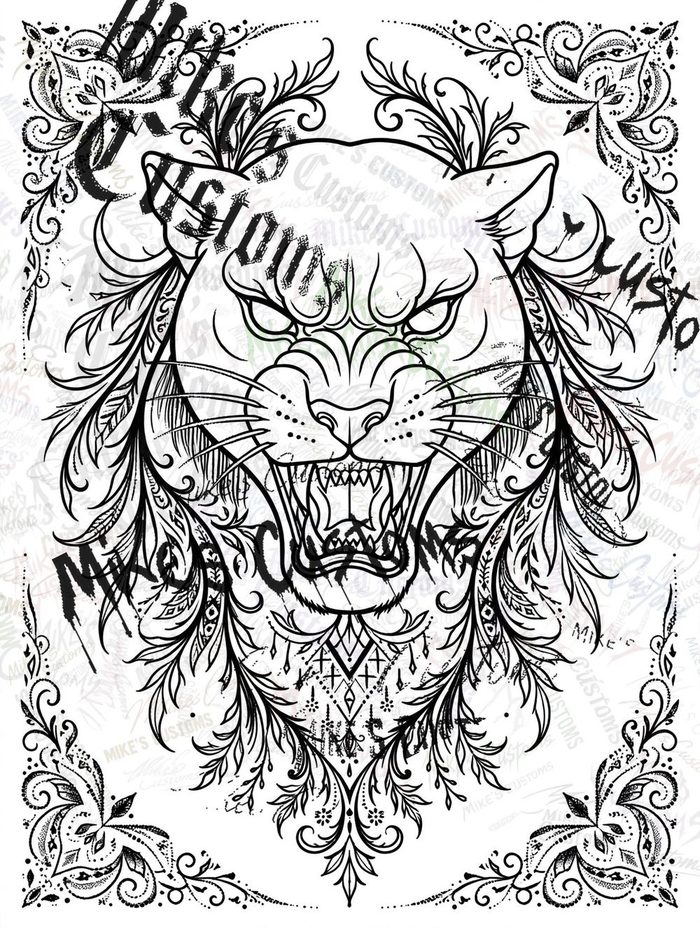
- Blackwork and dark floral work — roses, peonies and dark botanicals — are the classic answer: deep blacks, layered petals that swallow old lines whole, and shapes that can grow organically to whatever size the cover demands; the gallery's blackwork style guide shows the drawing language that makes it work.
- Japanese work — koi, dragons, waves — covers superbly for the same reasons: bold pattern, dark water, subjects drawn to wrap and flow over irregular territory.
- Skulls and dark realism put shadow exactly where a cover needs it.
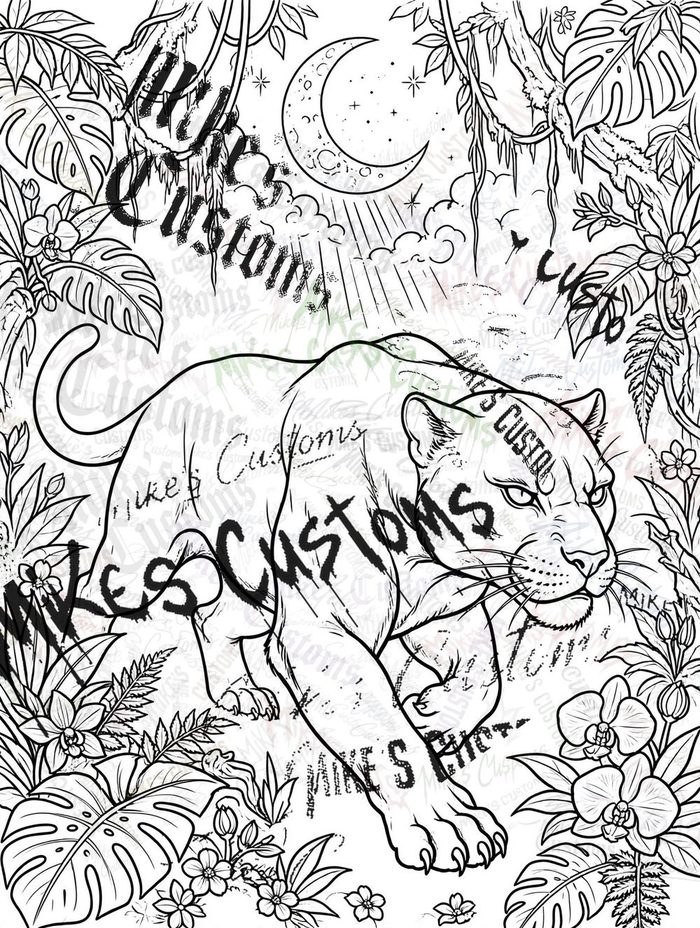
- Panthers earned their traditional nickname — the cover-up king — a century ago: a crawling black panther is mostly deliberate shadow with a shape the eye reads instantly.
What loses: anything pale, airy or minimal. Fine-line, watercolor, pastel and negative-space designs are beautiful styles and terrible covers, because they bring no darkness and no density to the fight. If your heart is set on a light style, your honest route is the next section.
Laser first: the option that changed everything
Modern cover-up practice often starts outside the tattoo studio, at a laser clinic. Two to four sessions of laser removal will not usually erase a tattoo completely — but they will fade it by half or more, and that changes the entire equation: a faded tattoo can be covered by designs that could never have fought the original at full strength, in colors and styles that were off the table.
The honest arithmetic: laser costs money per session, takes months because sessions space out while the body clears the broken ink, and hurts in a way clients describe as sharper and briefer than tattooing. Against that, it converts "impossible" and "compromise" covers into open choices, and it is the standard recommendation for saturated black work and bold lettering.
Two cautions worth more than the rest of this paragraph: laser results vary enormously with the ink, the machine and the operator, so get assessed in person; and agree the endgame with your tattoo artist before the first laser session, so the fading stops at "coverable" rather than paying for sessions past the point your chosen design needs.
Studios and laser clinics that talk to each other are the dream team here.
The third outcome: rework, don't cover
Between "cover it" and "live with it" sits the option nobody searches for: the rework. If the original tattoo's bones are sound — placement you like, shapes you still mean, just weak execution, blown lines or tired color — an artist can go back into the same design: re-line it, re-pack the color, add background and shading that give it the finish it never had.
Memorial pieces, children's names drawn badly, symbols you still believe in: these are rework candidates, and a rework is cheaper, smaller and less painful than a full cover because it builds instead of fighting. The diagnostic question is simple enough to ask yourself in a mirror: is it what the tattoo is that you hate, or how it was done? "What" means cover or laser.
"How" usually means rework — and the artist you want for it is one who shows rework in their portfolio without embarrassment, because it is genuinely skilled work.
Briefing the job, and what it costs
Cover-ups are custom work by definition — no premade design knows what it has to hide — so expect the consultation to matter more than the drawing at first.
Bring a clear photo in daylight, be honest about any previous cover attempts, and let the artist trace over the old piece; that tracing, with its required size drawn honestly around your tattoo, is the moment most people finally see the real shape of the job.
Cost follows size: because the new piece must be bigger and denser than the old, a cover-up almost always prices above the tattoo it replaces, and experienced cover artists are not the budget option in any shop — this is specialty work, and the cheap version is how people end up needing a cover of a cover.
Our custom design process guide explains how a brief becomes a drawing at this studio, and the same principles apply at any good shop:
- reference images of covers you admire
- your constraints stated plainly
- deposit-and-timeline agreed before anyone draws.
For inspiration with your eyes open, browse the Skulls / Death / Gothic shelf and the dark floral work beside it — the subjects there are the ones that win these fights — and remember that every design in the gallery can also serve as the starting point a custom artist adapts into your cover.
The process, in order:
- Assess the old tattoo honestly. Run the checklist an artist runs in the first thirty seconds: how dark and saturated is it, are the shapes open or bold, is there scar tissue, and has a previous cover attempt layered white or light color over it? Faded, soft black and grey is the best candidate; saturated black tribal and bold black lettering are the hard cases.
- Decide the route: cover, rework, or fade first. If the bones are sound and it is how the tattoo was done that you hate, a rework builds on it instead of fighting it. If it is what the tattoo is, the choice is a full cover — or laser first.
- Design over it, darker, bigger, busier. The new piece must be darker than the old where they overlap, roughly a third to half again larger so the eye is drawn to fresh skin at the edges, and patterned enough to break up the old shapes. Pick from the family that wins these fights: blackwork and dark florals, Japanese work, skulls and dark realism, and the crawling black panther.
- If laser comes first, agree the endgame before session one. Two to four sessions will not usually erase a tattoo, but fading it by half or more opens designs, colors, and styles that could never have fought the original at full strength — and the fading should stop at “coverable,” not pay past the point your design needs.
- Brief the job like custom work. Bring a clear photo in daylight, be honest about previous cover attempts, let the artist trace over the old piece, and agree reference images, your constraints, deposit, and timeline before anyone draws.
- Expect the sessions and the price to follow the size. Because the new piece must be bigger and denser than the old, a cover-up almost always prices above the tattoo it replaces — and experienced cover artists are not the budget option in any shop.
The sentence to remember
A cover-up succeeds when the new tattoo is something you would have chosen anyway — darker, larger and more detailed than the old one, picked from the family of designs that win fights — and it fails when it is chosen only as camouflage, in a style too light to hold the territory.
Judge your old tattoo by the physics, decide honestly among cover, rework and fade-first, and the tattoo in the drawer can stop being the story. The goal was never to pretend the first one didn't happen. It is to give the skin a better sentence to say.
Keep reading
Browse the Skulls / Death / Gothic shelf in the gallery, or read How Custom Tattoo Designs Work, Step by Step and the Blackwork style guide.
More from the article series:
- When Your Muse Has No GPU: Two Compute Workarounds Worth Knowing — November 18, 2026
- Phoenix Tattoo Meaning: Rebirth, Fire, and Rising on Your Own Terms — November 16, 2026
- Cherry Blossom Tattoo Meaning: Beauty That Knows It Is Brief — November 16, 2026