Inside the Gallery: How 4,791 Tattoo Designs Get Drawn, Checked, and Shelved
Most tattoo galleries online are scraped. Ours is drawn — every design, every page, every shelf. How a design starts, the three checks it has to pass, why the previews are watermarked, and what a gallery of 4,791 pages costs to keep honest.
Most tattoo galleries online are scraped. Ours isn't, and the difference is not a slogan — it is a workload. As of this writing the gallery holds 4,791 design pages, and every one of them exists because somebody at this studio drew the piece, checked it, wrote its page, and shelved it in the right place.
This article is the honest account of how that happens: where a design starts, what it has to survive before it goes on sale, and why we run the gallery this way when faster ways exist.
Every design starts as a drawing problem
A design enters the pipeline as a subject-and-style pairing: a subject people actually ask for — a wolf, a dagger, a grandmother's teacup — crossed with a style that changes what the subject means and how it must be drawn. The gallery's shelves are organized on exactly that matrix.
There are seventeen full style guides on this site because style is not decoration: a wolf in blackwork and a wolf in watercolor are different tattoos with different sizes, different placements, and different ten-year futures. When we plan a batch of new designs, we plan it against the shelves — which styles are deep, which subjects are thin, which combinations clients keep requesting that we cannot yet show them.
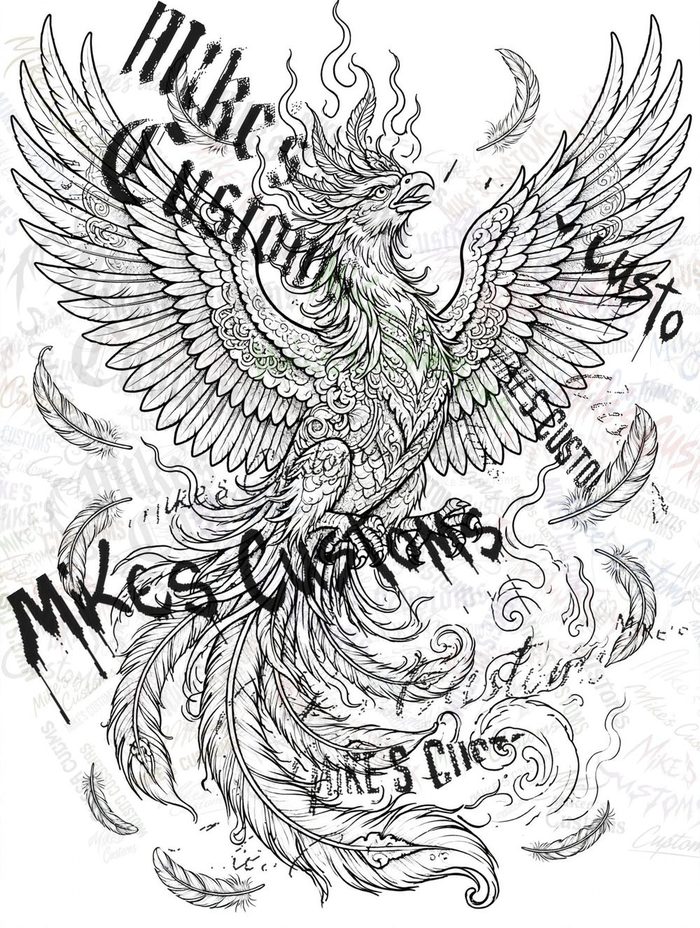
The drawing itself follows the rules our own guides preach. Line weights are chosen for skin, not for screens: fine detail that looks exquisite at poster size becomes mud at three inches, so designs are drawn at the size they are meant to be worn, with the minimum sizes stated honestly on the page.
Color work is drawn knowing how pigment settles and fades; blackwork is drawn knowing how lines spread. A design that only works as a picture and not as a tattoo does not get shelved — it gets redrawn or dropped, and more pieces are dropped than visitors would guess.
The checks a page has to pass
Before a design page goes live it passes three checks.
- The first is the drawing check: is the linework clean enough to stencil from? A tattoo artist works from our files, so the linework version matters as much as the pretty one — a design whose lines cannot be transferred is a poster, not a tattoo design.
- The second is the honesty check on the page itself: the stated size range, placement guidance, and aging notes have to match what the drawing can actually do. Our design pages carry the studio's tattooing notes for their style, and those notes are written from the same standard as the choosing-a-design guide — including the parts that cost us sales, like telling a client a design needs to be bigger than they hoped.
- The third check is the license: every design in the gallery sells with the same single-use tattoo license. The artwork is yours to have tattooed once; copyright stays with the artist; it cannot be resold or printed on merchandise. That license is stated on every page before anyone pays, because a client who understands what they bought is a client whose tattoo goes well.
| Stage | What happens | Why it matters |
|---|---|---|
| Subject-and-style pairing | A subject people ask for is crossed with a style, planned against which shelves are deep and which are thin | Style changes what a subject means, its size, its placement, and its ten-year future |
| Drawing | The piece is drawn at the size it is meant to be worn, with line weights chosen for skin | Fine detail that works at poster size becomes mud at three inches |
| Drawing check | The linework is checked for whether it is clean enough to stencil from | A design whose lines cannot be transferred is a poster, not a tattoo design |
| Honesty check | The page's size range, placement guidance, and aging notes are checked against what the drawing can actually do | Clients get the parts that can cost a sale, including being told a design needs to be bigger |
| License check | Every design is shelved with the same single-use tattoo license, stated on the page before anyone pays | The artwork is the buyer's to have tattooed once; copyright stays with the artist |
| Shelving and upkeep | The page is shelved in the right place, and shelves are re-read, redrawn, or retired as the studio learns | A gallery is minded daily; a scrape is finished the day it is copied and wrong forever after |
Why the previews are watermarked
Visitors sometimes ask why the gallery previews carry a watermark when other sites show clean images. The answer is the license above. A clean, full-resolution image online is a design anyone can take to any shop — which sounds generous until you are the artist whose work was taken, or the client who discovers their "original" on three other people.
The watermarked preview shows everything a buyer needs to judge the piece — composition, line weight, color, detail — while the full-resolution files are delivered on purchase. It is the same reason a jeweler keeps the good stones in the case: the value is real, so it is handled like it is real.
When a design isn't right, there is a second door
A gallery this size still cannot hold the design in a particular client's head, so the studio runs a custom pipeline beside it, and it is deliberately unglamorous:
- brief
- deposit
- drawing
- files.
A client writes a brief — subject, style, size, placement, references welcome — and pays half the custom price as a deposit.
The finished artwork is delivered within 48 hours of the paid deposit, the balance is due on delivery, and the piece carries the same single-use license as everything in the gallery. The full walkthrough lives in our guide to how custom tattoo designs work, including how to write a brief that gets you the drawing you actually want.
Two faster doors exist for looser ideas: by-request, for subjects you want our designers to take on, and doodle-to-tattoo, which turns a client's own rough sketch into finished, tattooable linework. Between the shelves and the custom desk, the honest answer to "do you have this design?" is either "yes, here it is" or "yes — give us 48 hours."
What 4,791 pages actually costs
The cost of running the gallery this way is maintenance, and it never ends. Shelves drift as new batches land; a subject that was thin in spring is deep by autumn. Pages written early get re-read against what the studio has learned since. Designs that no longer meet the drawing standard get redrawn or retired rather than left to dilute the shelves around them.
That is the real difference between a gallery and a scrape: a scrape is finished the day it is copied, and wrong forever after. A gallery is a promise that somebody is still minding the shelves. This one is minded daily — and if you find a page where we have fallen short of the standard in this article, the contact form reaches the person responsible for fixing it.
The shelves, by the numbers
The matrix the gallery is planned against is bigger than any single shelf suggests. Seventeen style guides anchor the style axis — blackwork, Japanese irezumi, fine line, traditional, watercolor, trash polka and the rest — because each style redraws every subject it touches. The subject axis runs to dozens of categories, from mythology and animals to lettering, memorial portraits and seasonal flash.
Cross the two and the planning problem becomes clear: a subject can be deep in one style and empty in another, and "we have wolves" is not the same claim as "we have a wolf for the client who wants fine line." Batches are planned into the gaps, not onto the piles.
The studio also keeps shelves most tattoo galleries would never stock — an ASCII-art shelf, where designs are built from text characters in a nod to the studio's software side, and a coloring-pages shelf feeding our Little Inkers coloring apps, where gallery linework does double duty as pages children can print.
New batches land on a running cadence rather than in annual dumps, which is why the count on this page will be stale by the time most readers finish the article: the gallery grows the way a working studio's flash wall grows, a sheet at a time, most weeks of the year.
The questions set the drawing list
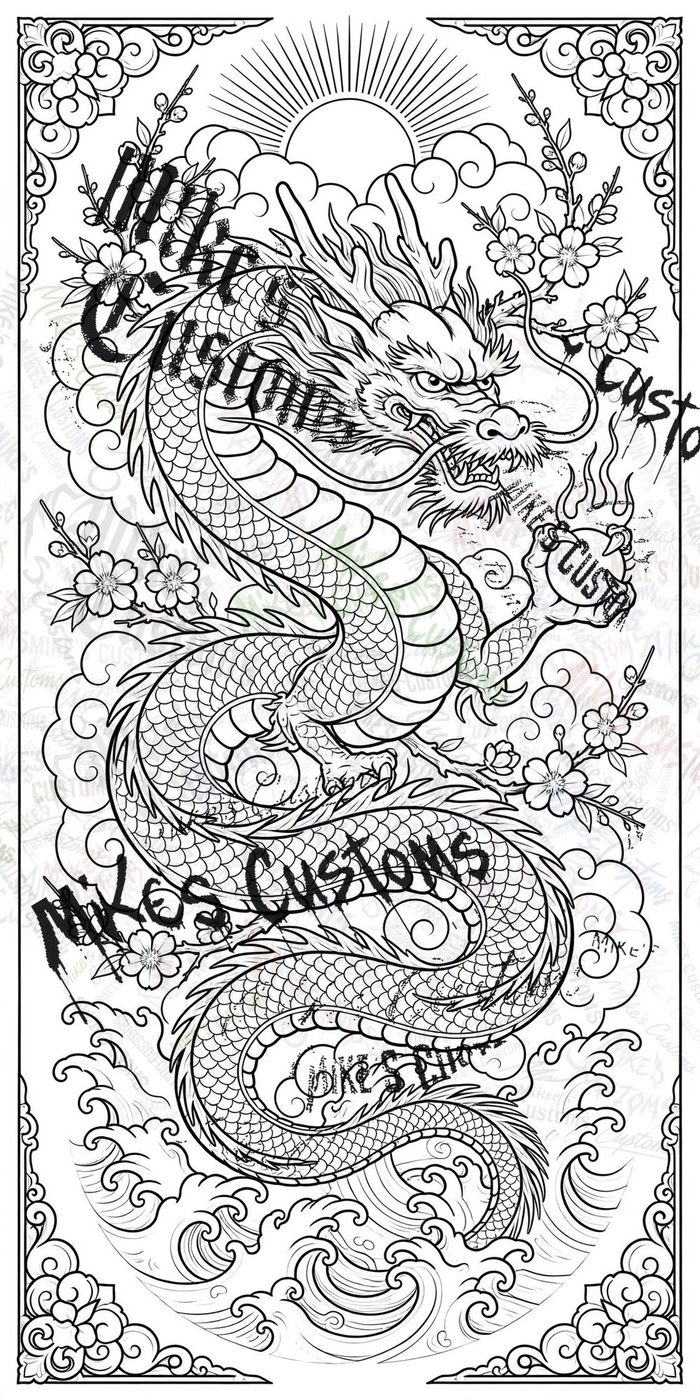
The last input is the one we trust most: what clients ask for and cannot find. Every custom brief that arrives asking for a subject the gallery lacks is a market signal with a name and a deposit behind it, and those signals feed the batch list directly.
The same goes for the questions that land in the contact inbox — a meaning we haven't covered, a placement nobody writes about honestly, a style comparison clients keep requesting. Several of the studio's most-used designs began as one client's brief that turned out to be a hundred clients' wish. That loop — ask, draw, shelve, get asked better — is the whole growth strategy. It is slower than scraping a million images.
It is also why a client who emails us in January about an obscure subject can buy it off the shelf in March, drawn properly, at tattoo size, with the aging notes written by somebody who expects to be emailed again when it heals.
Keep reading
Browse the gallery itself, read How to Choose a Tattoo Design That Ages Well, or see how the custom pipeline works in the guide to how custom tattoo designs work.
More from the article series:
- When Your Muse Has No GPU: Two Compute Workarounds Worth Knowing — November 18, 2026
- Phoenix Tattoo Meaning: Rebirth, Fire, and Rising on Your Own Terms — November 16, 2026
- Cherry Blossom Tattoo Meaning: Beauty That Knows It Is Brief — November 16, 2026