Neck and Throat Tattoos: The Honest Guide to Tattooing's Most Public Canvas
The neck and throat are tattooing's most public, least forgiving canvas — unhideable, painful in patches, and quick to show age. Pain by sub-area, the employment reality, blowout risk on thin skin, and why good artists say no first.
A neck or throat tattoo cannot be covered by a shirt, cannot be taken back, and sits on some of the thinnest, most mobile skin on your body — so it hurts more in patches, fades and blows out faster than work almost anywhere else, and changes what employers, clients, and strangers assume about you before you speak. That is the whole answer up front. If you still want one after reading it, this guide will help you get a good one.
None of that makes the neck a bad canvas. It makes it an honest one. Side-neck pieces on heavily tattooed people are some of the strongest work in any studio portfolio. The failures share a pattern: the neck was chosen early, small, or to prove something, on skin and in a life that were not ready for what the placement demands.
Why good artists gatekeep the neck
Many respected artists will not tattoo the neck or throat of someone with no visible tattoos, and some will not do it at all for a first or second piece. This is not snobbery. It is the same reasoning in our hand and finger tattoo guide: the artist's name is attached to a piece you cannot hide, on skin that punishes beginners, for a client who cannot yet know how they feel about being visibly tattooed at a job interview or a wedding.
Studios call hands, neck, and face "job stoppers," and the term survives because the reality underneath it has only partly changed. Plenty of workplaces now accept visible tattoos. Plenty still do not — including some medical and legal settings, customer-facing corporate roles, military and public-safety paths, and clients in conservative industries who make quiet decisions they never explain.
An artist who asks about your work, your other tattoos, and your plans is doing the job properly. An artist who books a throat piece for a walk-in with bare arms, no questions asked, is telling you something about how much of the outcome they plan to own. Believe them.

The map: side, back, and front are three different tattoos
"Neck tattoo" covers three canvases with different pain, different visibility, and different aging, and any honest plan names which one it means.
| Sub-placement | Pain, honestly | Visibility | How it ages |
|---|---|---|---|
| Side of neck, behind and below the ear | Moderate — a steady three to five; skin is thin but workable | High in profile; partly softened by long hair, never hidden by a collar | Fair to good; some sun exposure, moderate movement |
| Back of neck, below the hairline | Moderate — worse near the spine and hairline, easier toward the shoulders | Lowest of the three; covered by hair and most collars | Good; protected from sun, though collars and hair rub it daily |
| Front and throat, under the jaw and over the windpipe | High — six to eight for most people; thin skin, constant swallowing, nowhere to brace | Total. It is the first thing seen in every conversation | Hardest on the body: constant flexing, thin skin, highest blowout and softening risk |
| Under-jaw and jawline edge | High — bony, sensitive, and awkward to stretch while working | Total from most angles | Poor for fine detail; movement and thin skin blur small work early |
The back of the neck is the only one of these that behaves like a normal placement, which is why it is where neck work sensibly starts. The side is the classic statement — a single bold emblem, a moth, an eye, a dagger — worn by people who already know what public ink costs. The front and throat are the deep end: even experienced collectors often arrive there last, after the chest and shoulders are done, because throat work reads unfinished unless the pieces around it support it.
Pain and the session itself
Neck sessions are physically awkward. You will lie with your head turned or tilted back, breathing and swallowing move the canvas, and the machine beside your ear makes the session feel longer than the clock says. Front-of-throat work adds a discomfort people describe as vulnerability more than pain: someone is pressing on your windpipe, by design, for an hour.
Plan short. A side-neck emblem is usually a single sitting of one to two hours, and that is a mercy — endurance on the neck runs out faster than on an arm. Eat beforehand, expect your artist to reposition you often, and say so early if you feel faint; neck work makes light-headed clients out of people who sat through sleeves without a break. Our first-tattoo placement and pain guide puts the neck in its full body-wide context, and it is not near the friendly end of that map.
Healing has its own local rules. The neck moves every time you look over your shoulder, collars and seatbelts rub it, and hair products, perfume, and shaving all reach it before they reach most tattoos. Follow our aftercare guide, and add two neck-specific habits: sleep on a clean pillowcase turned fresh each night, and check the piece in a mirror you did not use for the stencil, because you cannot see most of your own neck directly.
Thin skin, blowouts, and what survives here
Throat and under-jaw skin is thin, loose, and constantly flexing — the three conditions that spread ink. A blowout, where ink drifts into the surrounding tissue and leaves a bruised halo, is a risk on any skin; on the throat it is a standing condition artists actively design around. Fine lines soften early.
Tight lettering closes up. Small, detailed designs that would survive a decade on a forearm can go vague on a throat in a few years, a process our article on how tattoos age explains in skin terms.
What survives is what survives everywhere, only more so: bold shapes, strong black, open skin left open, and size. This is why classic neck work is big, simple emblems in blackwork or traditional styles rather than delicate fine-line pieces. A moth, an eye, a swallow, a dagger — one subject, drawn larger than you first pictured, with negative space doing half the work.
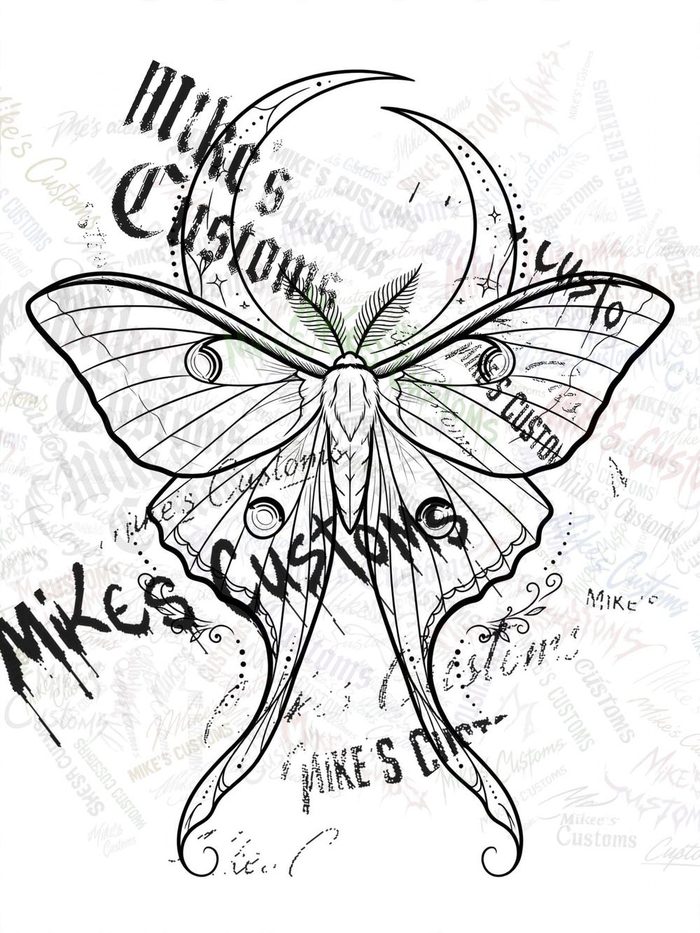
Sun is the other slow problem. Necks take sun from every direction, including the drive to work, and there is no sleeve for a throat. Color on the front and sides fades faster than color almost anywhere covered, and black softens toward grey without sunscreen. If you will not put sunscreen on your neck daily once a piece is healed, choose black, choose bold, and accept the softening as part of the design's life.
The visibility reality, stated plainly
You will be read by your neck tattoo in rooms where nobody tells you it happened. Some readings are the point — studios, stages, and scenes where visible ink signals belonging. Others cost real things: the interview that ends early, the client who picks the other firm. A turtleneck can mute a side piece for an hour; nothing mutes a throat piece, and planning as if it might is how people end up paying for laser sessions, which our first tattoo guide treats as a decision to avoid making in reverse.
Test the life before you live it. Wear the design as a large temporary transfer, or drawn on by your artist, for two full weeks of your actual routine — work, family, the gym, the store — and notice what changes. People who have done this and still want the piece are the people whose neck tattoos read as settled and right years later.
People who skip it supply most of the cover-up and removal trade. If a sleeve is in your future anyway, our sleeve planning guide shows how neck work is normally sequenced last, as a capstone rather than a starting point.
If you are set on it: the decision steps
- Check the collection first. If your arms, chest, and back are mostly bare, do those first. Return to the neck with visible work and a proven relationship with being tattooed in public.
- Name the sub-placement. Back, side, or front — and choose back or side unless you fully accept total, permanent visibility.
- Answer the work question in writing. Your current job, the job you want in five years, and any licensing or uniform rules. If there is a gap, close it before the appointment, not after.
- Pick one bold subject and size it up. One emblem, more black than you first imagined, open skin inside it, and at least a third larger than your first instinct.
- Wear it temporarily for two weeks. Through workdays and family days, not just weekends with friends.
- Book the artist who asked hard questions. Bring references of healed neck work — healed, not fresh — and expect to be talked out of the fine-line version. That conversation is the quality signal.
Browse the Characters / People shelf for the bold emblem designs that suit this canvas — eyes, moths, daggers, and single-subject blackwork drawn with the open space neck skin demands. Every design ships with the finished artwork and clean linework, and the custom desk can enlarge and simplify a design for neck placement before your artist ever sees it, which is exactly the adjustment this placement most often needs.
The neck is not forbidden ground. It is final ground. Arrive there tattooed, employed on your own terms, and certain — and a neck piece becomes what it is on the people who wear it best: the last, deliberate word in a collection that was already saying something.
Keep reading
Browse the Characters / People shelf in the gallery, or read Your First Tattoo: A Complete, Calm Walkthrough and the Blackwork style guide.
More from the article series:
- When Your Muse Has No GPU: Two Compute Workarounds Worth Knowing — November 18, 2026
- Phoenix Tattoo Meaning: Rebirth, Fire, and Rising on Your Own Terms — November 16, 2026
- Cherry Blossom Tattoo Meaning: Beauty That Knows It Is Brief — November 16, 2026