Anchor Tattoo Meaning: Steadfast, Grounded, and the Sailor's Promise
An anchor tattoo means holding fast — steadfastness, grounding, and a sailor's promise to come home. What the flukes, rope and ring each say, which forms carry it best, and where it sits and ages well.
An anchor tattoo means holding fast: steadfastness, grounding, and the promise that whatever weather you sail through, something in you does not drift. For sailors it was literal — the anchor was the last thing between a ship and the rocks — and for everyone who has borrowed it since, it still says the same plain sentence: this is what keeps me in place, and I chose it on purpose.
That directness is why the anchor has outlasted almost every other nautical design. It needs no explanation at a glance, it draws cleanly at almost any size, and its meaning stretches without breaking — a person, a place, a faith, a recovery, a child, a decision never to run again. This article reads the anchor part by part, compares its main forms honestly, and covers the placements where it sits, reads, and ages best.
Where the meaning comes from
On a working ship, the anchor is not decoration. It is heavy iron that bites into the seabed and holds tons of vessel against wind and current, and the crew trusts it while they sleep. Sailors tattooed the tools they trusted, and the anchor joined the swallow, the rope, and the compass in that working set — a point our compass tattoo meaning article traces from the other side of the same deck.
Sailor tradition gave the anchor a second, earned meaning: crossing the Atlantic and returning was a milestone, and nautical flash treated the anchor as a mark of a sailor who had made that crossing and come home — proof as much as symbol.
Landlocked wearers kept the core and dropped the mileage. Today an anchor most often names the steadying force in a life — the partner who holds you, the hometown that raised you, the sobriety date, the parent whose example you steer by. Storms are assumed; holding is the achievement.
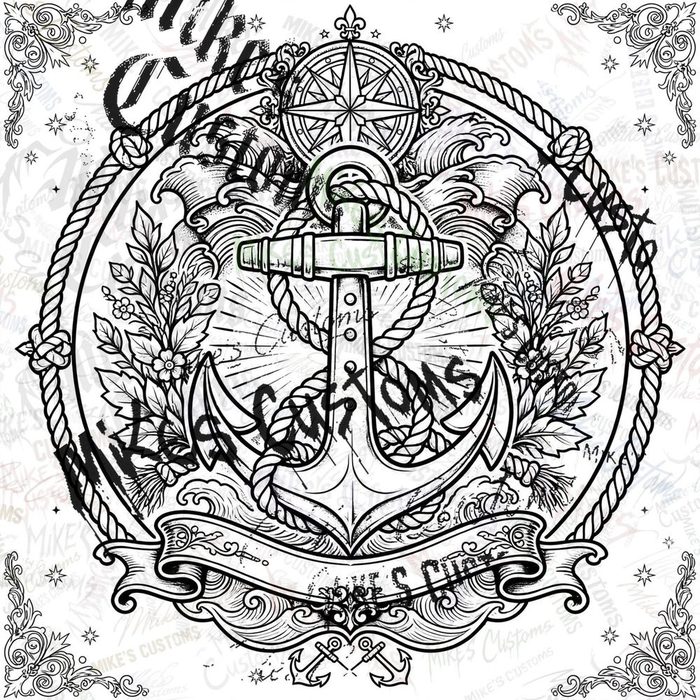
Reading the anchor, part by part
An anchor is built from named parts, and tattoo artists use every one of them. The flukes are the pointed arms at the bottom that dig in and grip; in a drawing they carry the sense of resolve, the part that refuses to let go. The shank is the long central spine — the backbone of the design, and the line that decides whether a small anchor reads as an anchor or as a cross with ambitions.
The stock is the crossbar near the top, set at a right angle to the flukes, and the ring at the very top is where the rope or chain attaches. That ring is where the meaning often lives: whatever is drawn through it — a rope, a chain, a banner with a name — is the thing doing the holding, or the thing being held. A rope that runs off the edge of the design says the tie continues beyond the frame. A broken chain says the opposite, and some wearers choose exactly that: held once, free now, still steady.
The crown, where the arms meet the shank, is the drawing's stress point, and good artists thicken it slightly. It is a small technical detail with a long-term payoff, because the crown is where a cheaply drawn anchor blurs first as lines settle over the years.
The main forms, compared
Anchors are drawn in a handful of recurring forms, and the form changes both the reading and the placement that suits it. Use this comparison before you fall for a single reference photo.
| Form | What it says | Best placements | Honest size note |
|---|---|---|---|
| Plain traditional anchor | Steadfastness, plain and unadorned | Forearm, upper arm, calf, chest | Reads well from about three inches; bold lines age best |
| Anchor with rope or chain | The tie that holds you — a person, crew, or home port | Forearm wrap, upper arm, side of calf | Needs extra length so the rope stays readable, not tangled |
| Anchor with banner and name or date | A named commitment or memorial | Chest, forearm, upper back | Lettering sets the floor; small text closes up over time |
| Anchor crossed with a compass | Direction plus stability — where I am going, and what holds me | Chest, upper back, thigh | Two symbols need room; plan palm-sized or larger |
| Small minimal anchor | A private marker — a date, a promise kept quiet | Wrist, ankle, behind the ear, finger side | Keep it to a silhouette; interior detail will not survive tiny |
None of these forms is the correct one. The plain anchor is the most timeless and the most forgiving as it ages. The banner version is the most personal and the least flexible — a name is a permanent sentence, which is rather the point, and also worth one honest night of sleep before the appointment.
The company an anchor keeps
Like the rose in our rose tattoo meaning article, an anchor changes its sentence depending on its partners:
- A rose wound around the shank softens it toward love that steadies.
- Swallows add the voyage and the return — the anchor says you held, the swallows say you came back.
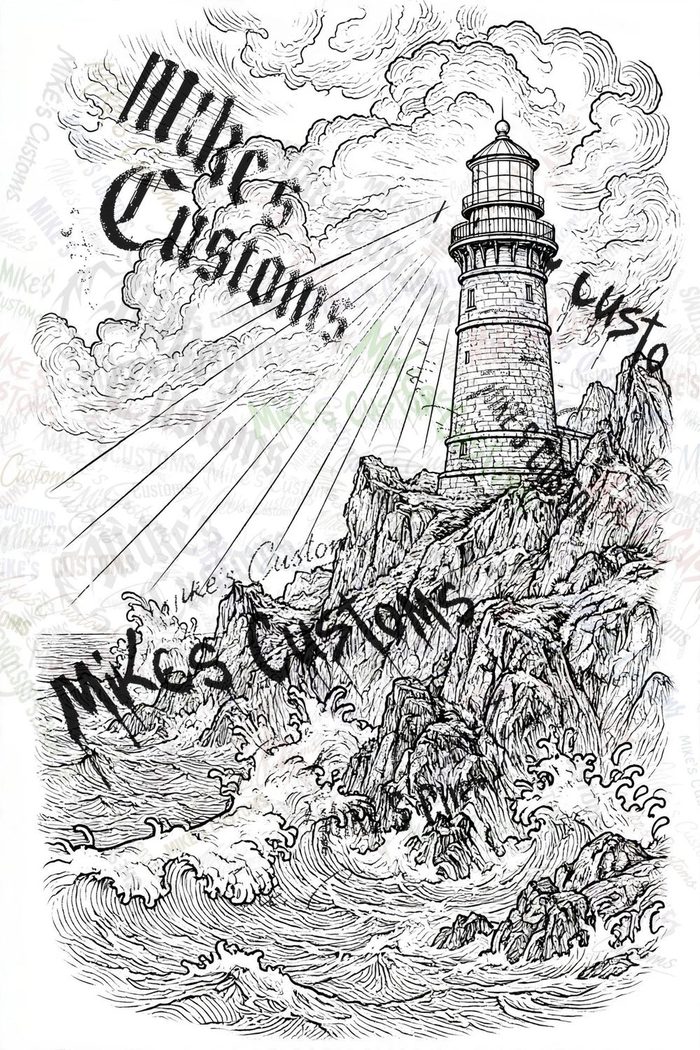
- A lighthouse adds guidance to stability: the light shows the way, the anchor keeps you off the rocks once you arrive.
- A ship's wheel behind an anchor leans into steering and responsibility — the person at the helm.
- Waves at the base admit the obvious, that the water was not calm.
- A skull worked into the crown pushes the whole piece toward the harder reading covered in our skull tattoo meaning article: hold fast, because time does not.
Keep the crew small. An anchor plus one partner reads instantly. An anchor plus five partners becomes a scene, and scenes need a bigger canvas and a different conversation about sessions and budget.
Placement: where anchors sit best
The anchor is a tall, symmetrical design, and it rewards placements that let it hang straight. The forearm is its modern home for a reason: the shank runs with the limb, the flukes spread across the wider top of the forearm, and the wearer can read it like equipment they carry. Our forearm placement guide covers the twist check that keeps a vertical design honest when the arm rotates.
The chest takes a centered anchor beautifully, especially paired or bannered work, and keeps it private under a shirt. The calf offers a flat back panel where a medium anchor hangs cleanly. The upper arm and shoulder suit the traditional form and leave room to add rope, waves, or a second nautical piece later.
Small anchors live on wrists, ankles, and behind ears, with the warning that belongs to all small work: simplify. At an inch tall, an anchor is a silhouette with a crossbar — draw it that way on purpose and it will still read in twenty years. Draw a detailed ship's anchor at an inch tall and time will simplify it for you, less kindly. The mirror check in our stencil-day guide is where that decision gets made while it is still free to change.
Style decides how it ages
The anchor was standardized in the American Traditional style — heavy outline, limited flat color, shapes big enough to survive decades — and that version remains the safest long-term bet. Traditional anchors are famous in studios for walking in thirty years old and still reading across a room.
Blackwork anchors, drawn in solid black with open-skin highlights, age nearly as well and suit wearers who want the symbol without the sailor colors. Realism anchors — rust, barnacles, coiled rope rendered in soft grey — look striking when fresh and need size to hold: the texture that makes them real is the first thing softening takes, a pattern explained in our guide to how tattoos age. Give a realism anchor six inches or more and strong dark anchors of its own, in the drawing sense: a solid crown, a dark ring, real contrast at the flukes.
Color needs one practical note. Traditional reds and greens on an anchor hold well on covered skin and fade faster on forearms and calves that live in the sun. Sunscreen after healing is not a fussy extra for color work; it is the maintenance the design assumes, and our aftercare guide sets out the long-term routine.
Choosing yours
Start by naming what holds you, in one sentence, before you look at a single drawing. Then pick the form from the table that says that sentence without extra words, let the rope, banner, or partner carry the personal detail, and let placement and size discipline the rest. Our guide to choosing a design walks that order of decisions in full, and it is the order artists wish every client arrived with.
Browse the Nautical / Ocean shelf in the gallery with that sentence in hand: plain emblems, rope-wrapped anchors, banner pieces waiting for a name, and lighthouse and compass companions drawn to pair with them. Every design ships with the finished artwork and the clean linework your artist stencils from, and the custom desk can redraw any anchor at the size your placement honestly needs — longer rope, heavier crown, lettering spaced to survive.
An anchor is a modest design that makes an immodest claim: that you know what holds you, and you trust it in bad weather. Chosen that way, it earns its place for life.
Keep reading
Browse the Nautical / Ocean shelf in the gallery, or read How to Choose a Tattoo Design That Ages Well and the American Traditional style guide.
More from the article series:
- When Your Muse Has No GPU: Two Compute Workarounds Worth Knowing — November 18, 2026
- Phoenix Tattoo Meaning: Rebirth, Fire, and Rising on Your Own Terms — November 16, 2026
- Cherry Blossom Tattoo Meaning: Beauty That Knows It Is Brief — November 16, 2026