Chicano Tattoos: The Complete Guide
Fine-line black and grey born in the barrios and penitentiaries of the Southwest: payasas, lowriders, lettering, Catholic imagery and portraits in pencil-soft shading.
Chicano tattooing grew from the Mexican-American communities of California and the Southwest, drawn first with whatever was at hand — guitar-string needles, ink made from ashes — in the pinto (prison) and barrio traditions. Its fine single-needle lines and whisper-soft black and grey shading come directly from those handmade tools, and its imagery is a culture's diary: payasas (clown girls), lowriders, Virgen de Guadalupe portraits, praying hands, rosaries, Aztec warriors and calendars, and elaborate script lettering.
What began as identity written on skin under hard circumstances became one of the most influential styles in the world — modern fine-line black and grey realism descends from it directly.
Chicano at a glance
| Line weight | Ultra-fine single-needle lines with pencil-soft shading, almost no outline |
|---|---|
| Palette | Black and grey only, in whisper-soft single-needle gradients |
| How it ages | Softens like fine-line grey work; deep black structure keeps its soul |
| Best placements | Back, chest, sleeves and forearms, on flat sun-protected skin |
| Minimum size | Faces and payasas 5 inches and up; ornate script needs real letter height |
How Chicano designs are drawn
A Chicano design is drawn like a pencil masterpiece: ultra-fine lines, shading built in smooth single-needle gradients, almost no hard outline anywhere. Faces carry the style — the payasa's painted tears, a portrait's gaze — surrounded by smoke, roses, dice, cards and filigree lettering. Script is a pillar of the style: names, neighborhoods and mottos in ornate, flowing letterforms that are artworks in themselves.
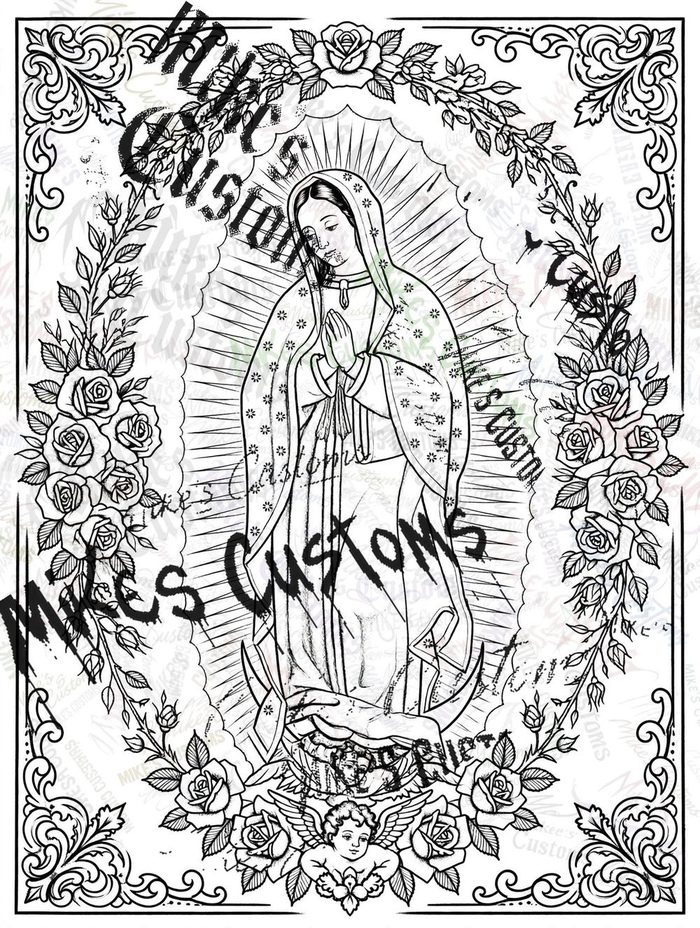
Best placements for Chicano tattoos
Chicano work traditionally claims large, flat territory: full backs for scenes and portraits, chest pieces, sleeves of portraits and lettering, and forearms for script and single figures. The soft shading needs calm skin and protection from the sun to keep its pencil-drawn delicacy; it is fine-line work, with fine-line's placement cautions about hands and other high-turnover skin.
Chicano placement carries traditions worth knowing before you claim the canvas. Large back and chest pieces historically hold the biggest statements, full scenes, Virgins, portraits and lettering composed together, while forearms carry the style's everyday classics: a name in script, a payasa, praying hands with a rosary. Neck and hand work in this tradition has historically signaled a particular commitment and visibility, and while meanings have loosened, a wearer should still choose those placements knowing the work cannot be covered and the fine shading there fades fastest. Lettering placement follows reading: script is set along the forearm, across the chest or down the ribs so it reads in the body's natural posture, and curved baselines are drawn for the body part rather than straightened from a font file. Portraits need the same flat, calm skin as all fine black and grey, with an extra caution: the faces in this style carry expression in very light tones around the eyes and mouth, and a placement that creases through those features, such as the elbow ditch or the side of the knee, will age the face before its time.
How big does a Chicano tattoo need to be?
Portraits and payasas need realism's sizes — five inches and up for a face to hold its expression as the shading settles. Lettering can run smaller but the ornate scripts need height per letter to stay open; a name across a forearm is the classic format for a reason. Full Chicano scenes are large-format projects, planned as compositions rather than collected piece by piece.
How Chicano tattoos age
As fine-line black and grey, Chicano work softens with time — the smoke gets smokier. Strong pieces are built with enough deep black in the structure to survive it, and the style's community has always treated touch-ups as normal upkeep. Sunscreen matters enormously: nothing eats soft grey gradients like UV. Worn with care, a Chicano piece keeps its soul — the expression, the lettering, the story — for life.
The single-needle build of Chicano work shapes both its sessions and its healing. Shading this soft is laid slowly, in light passes, so a large portrait can take longer than a bolder style of the same size, and artists may heal the deepest blacks first and return for the smoke and lightest greys once the foundation has settled, rather than overworking fine skin in one day. Fresh Chicano work can look surprisingly pale and washed out during the first two weeks; the pencil tones deepen in appearance as the new surface skin clears, and judging or, worse, demanding more shading at that stage leads to pieces that heal too dark. Keep soft grey work out of sun with particular discipline, because there is no outline and no saturated color to carry a faded passage. Chicano suits people connected to or deeply respectful of the culture the imagery comes from, who want story and identity carried in the work itself. It does not suit anyone treating payasas, Virgins and lowrider imagery as generic decoration stripped of meaning, or anyone unwilling to give fine shading the size, flat skin and sun protection it needs to survive.
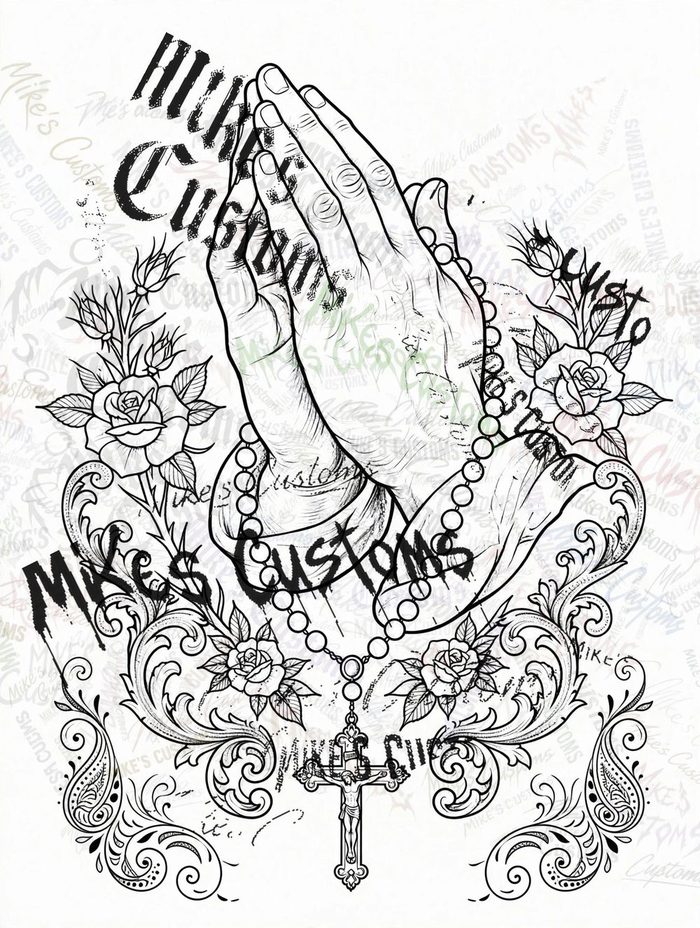
Choosing a Chicano design
Choose Chicano designs for the story they tell, and choose the artist for their fine-line hand — this style forgives nothing. Our gallery's Chicano pieces come with linework maps your artist can follow for the shading structure. For names and mottos in Chicano script, order custom and spell every letter in the brief twice; the lettering is the tattoo.
For script specifically, choose the words with the same permanence test you would apply to a portrait. Names and mottos in this style are drawn as flowing, connected letterforms, so a phrase that fits a forearm today should be laid out by the artist as a complete composition, with its flourishes planned around the wrist and elbow, rather than typed in a font and stretched. Bring the exact spelling, capitalization and any dates in writing to the appointment, and read the finished stencil letter by letter out loud before work begins.
Browse Chicano designs Order a custom Chicano design
Related style guides
- Trash Polka — Controlled chaos from Würzburg: photorealistic black and grey smashed against bold red graphic elements, splashes, brush strokes and typography.
- Optical Illusion — Tattoos that trick the eye: impossible geometry, 3D cubes and holes, rippling patterns and double images that move, flip or deepen as you look.
- American Traditional (Old School) — The original American tattoo style: bold black outlines, a tight palette of red, green, yellow and brown, and imagery — eagles, anchors, swallows, daggers, roses — built to stay readable for a lifetime.
New to all of this? Start with how to choose a tattoo design that ages well, then the complete aftercare guide for what happens after the appointment.